Understand the Real Cost Before You Borrow
Loans can help cover an important expense, consolidate debt, or spread a large purchase over time. But the amount you receive is only one part of the decision.
Interest, fees, repayment length, and monthly payments all affect what borrowing may ultimately cost.
We provides clear guides, comparisons, and calculators to help you understand those numbers, consider the risks, and make a more informed decision.
LookUpLoans is an educational website, not a lender, loan broker, or financial advisor. We do not approve applications or guarantee loan offers.
Disclaimer: This site contains affiliate links. If you make a purchase, we may earn a commission at no extra cost to you.
A Few Numbers Worth Knowing
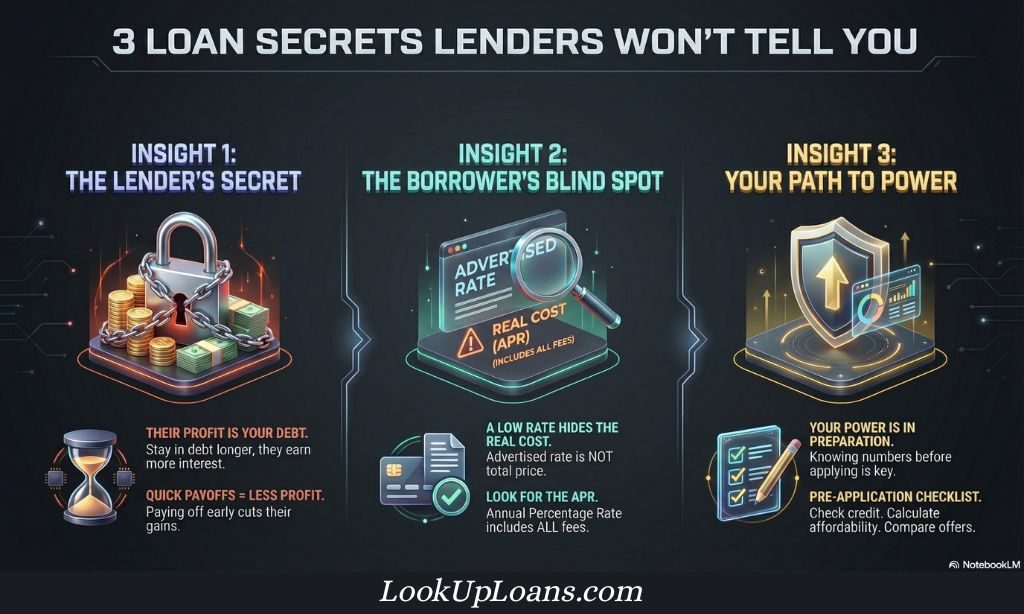
Financial products can be difficult to compare when advertisements emphasize the payment, speed, or lowest available rate. These examples show why looking beyond the headline can matter.
11.86% Average Personal-Loan Rate
According to the Federal Reserve’s Consumer Credit report , the average interest rate reported by commercial banks for a 24-month personal loan was 11.86% in May 2026.
That is a market average, not a rate every applicant will receive. Actual offers may vary based on the lender, credit history, income, existing debts, requested amount, and other eligibility factors.
22.15% On Credit-Card Accounts Charged Interest
The same Federal Reserve report shows an average rate of 22.15% for credit-card accounts that were assessed interest in May 2026.
Credit cards and personal loans have different repayment structures, so this is not a direct product comparison. It does show why it can be useful to compare the cost and repayment terms of each option rather than choosing based only on convenience.
$1,390 More in Interest
Consider a $10,000 loan with a fixed 12% interest rate and no additional fees.
A Three-Year Term Would Result In
- A monthly payment of approximately $332.
- Approximately $1,957 in total interest.
A Five-Year Term Would Result In
- A monthly payment of approximately $222.
- Approximately $3,347 in total interest.
The longer term lowers the monthly payment by about $110, but it adds approximately $1,390 in interest.
For current consumer-credit rate data, review the Federal Reserve’s Consumer Credit report .
This is an illustrative calculation, not a loan offer. Results are rounded and assume fixed monthly payments, no fees, and no early repayment.
Almost 400% APR
The Consumer Financial Protection Bureau explains that a typical two-week payday loan charging $15 for every $100 borrowed is equivalent to an APR of almost 400%.
That does not mean a borrower pays 400% during those two weeks. APR converts the short-term cost into an annualized rate, making it easier to compare with other forms of credit.
Check Your Credit Reports Before Applying
Credit-report information may affect whether you qualify and which terms you receive.
The Federal Trade Commission reported in a 2013 study that 5% of consumers had errors on at least one of their three major credit reports that could result in less favorable terms for products such as loans or insurance.
The study also found that one in five participants had an error corrected by a credit-reporting agency after filing a dispute.
When Reviewing Your Reports, Look For:
- Accounts you do not recognize
- Incorrect balances
- Payments marked late that you believe were made on time
- Debts listed more than once
- Closed accounts reported as open
- Personal information that does not belong to you
You can request reports from Equifax, Experian, and TransUnion through AnnualCreditReport.com , the website authorized by the federal government for free credit reports.
The FTC also explains how to dispute inaccurate or incomplete information .
Common Borrowing Mistakes
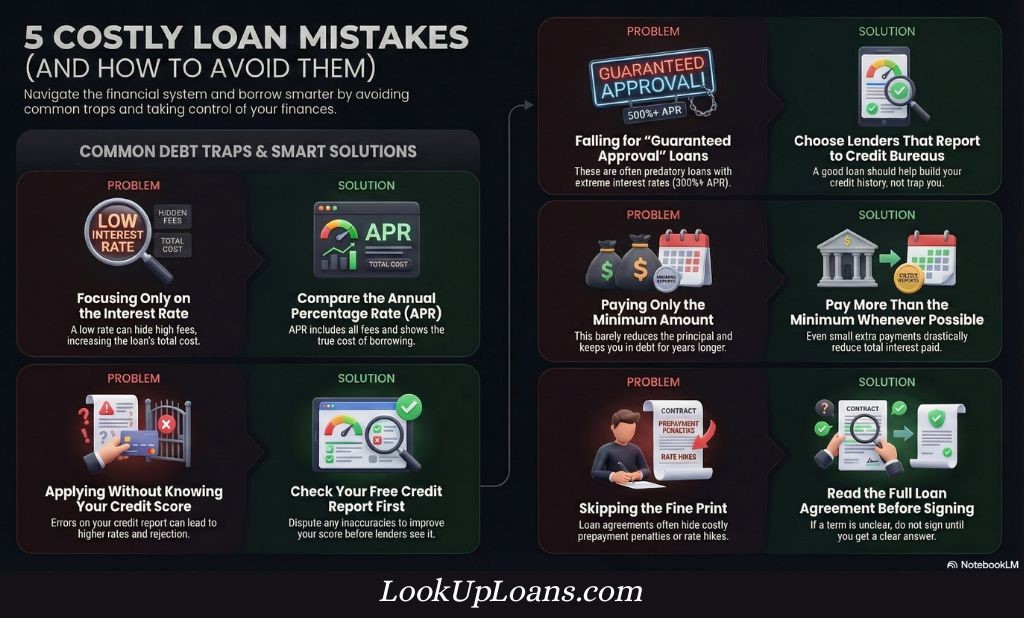
Many expensive borrowing decisions begin with a detail that was overlooked rather than a dramatic mistake.
-
Comparing Only the Interest Rate
A low advertised rate may not reflect origination fees or other charges.
Compare the APR, amount received, monthly payment, repayment term, and total repayment.
-
Looking Only at the Monthly Payment
A lower payment may come from a longer repayment term.
That can make the loan easier to manage each month while increasing the total interest paid.
-
Borrowing the Maximum Available
The amount a lender is willing to offer may be higher than the amount your budget can comfortably support.
Start with the expense you need to cover and calculate the payment before deciding how much to borrow.
-
Applying Before Reviewing Credit Reports
An application is not the best time to discover outdated or inaccurate information.
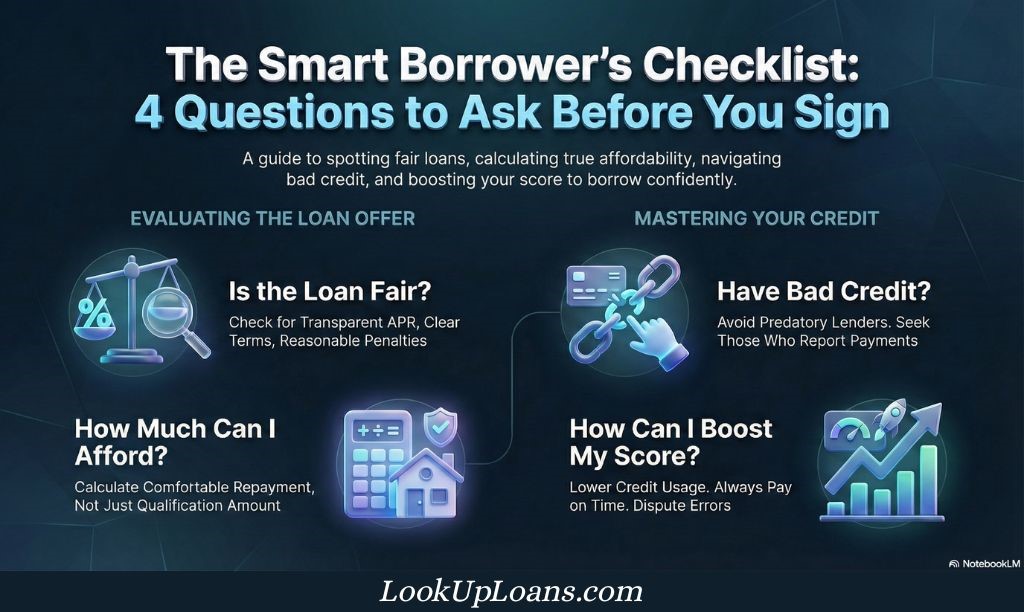
Review your reports before applying when time allows.
-
Accepting Unclear Terms
Do not rely only on advertising language or a verbal explanation.
Review the written disclosures, including the APR, finance charge, amount financed, payment schedule, and total of payments.
-
Assuming Every Loan Builds Credit
Credit reporting practices vary.
Ask whether the lender reports payments, which credit bureaus receive the information, and how missed payments or defaults may be reported.
-
Borrowing Repeatedly for Regular Expenses
Using new loans to cover recurring monthly shortages may create additional financial pressure.
When possible, consider whether the problem requires a different payment arrangement, expense reduction, assistance program, or longer-term plan.
What Makes a Loan Easier to Evaluate?
A loan offer is easier to understand when it clearly presents:
- The APR
- All required fees
- The amount financed
- The amount you will receive
- The number of payments
- The payment amount
- The total repayment
- Late-payment consequences
- Prepayment terms
- Collateral requirements
- Credit-reporting practices
You should also be able to identify the lender, confirm how to contact it, and review the full agreement before accepting.
Be cautious when an offer depends on pressure, unclear fees, guaranteed approval language, or requests for money before the lender provides the promised service.
When an Unexpected Expense Happens
Car repairs, medical expenses, home emergencies, and other surprise bills can put pressure on almost any budget.
Before borrowing, consider:
- How much you actually need
- Whether part of the expense can be postponed
- Whether the provider offers a payment plan
- What payment your budget can support
- How much the financing will cost in total
- What may happen if you cannot repay on schedule
Depending on the situation, possible alternatives may include:
- A payment arrangement
- A credit-union loan
- A personal loan
- A secured borrowing option
- Local financial-assistance programs
- Help from a nonprofit organization
- Negotiating the bill directly
- Using savings when doing so will not create a larger emergency
No single option is right for every person. The goal is to understand the cost and consequences before making a commitment.
Secured Loans
Funding Options
Find rates and terms that fit your financial goals. Explore reliable secured loan options today.
Secured Credit Cards
Build Safely
Compare top secured cards with low deposits. Start building your credit history safely.
How to Build Credit Fast
Credit Strategy
Follow simple steps to see quick results. Learn proven methods to improve your credit score.
Extra Expenses?
Check Your Options
Unexpected costs can put pressure on anyone. From car repairs to surprise bills, see what personal loan options may be available.