A balance transfer credit card can help you move existing credit card debt to a new card with a lower promotional interest rate, often 0% APR for a limited time. The goal is simple: pay less interest, put more of each payment toward your actual balance, and give yourself a clearer path out of debt.
That sounds great, and sometimes it is. But a balance transfer is not magic. It usually comes with a transfer fee, the promotional rate does not last forever, and late payments can create expensive problems. The right card can save you money, but only when the math works and you have a realistic payoff plan.
This guide explains how balance transfer credit cards work, when they make sense, when they do not, and how to compare offers without getting dazzled by the shiny “0% APR” sticker. That sticker is useful, but it should not do all the talking.
Key Takeaways
- A balance transfer credit card lets you move debt from one credit card to another, often to take advantage of a lower promotional interest rate.
- A 0% intro APR offer does not always mean the transfer is free. Many cards still charge a balance transfer fee.
- The best balance transfer offers help you save more in interest than you pay in fees.
- A balance transfer works best when you have steady income, decent credit, and a clear payoff plan.
- The biggest risk is carrying a balance after the promotional period ends, when the regular APR may apply.
- You should avoid new credit card debt while paying down the transferred balance.
- A balance transfer card is a tool. It works best when it supports a real debt payoff plan.
Disclaimer: This site contains affiliate links. If you make a purchase, we may earn a commission at no extra cost to you.
What a Balance Transfer Credit Card Actually Does
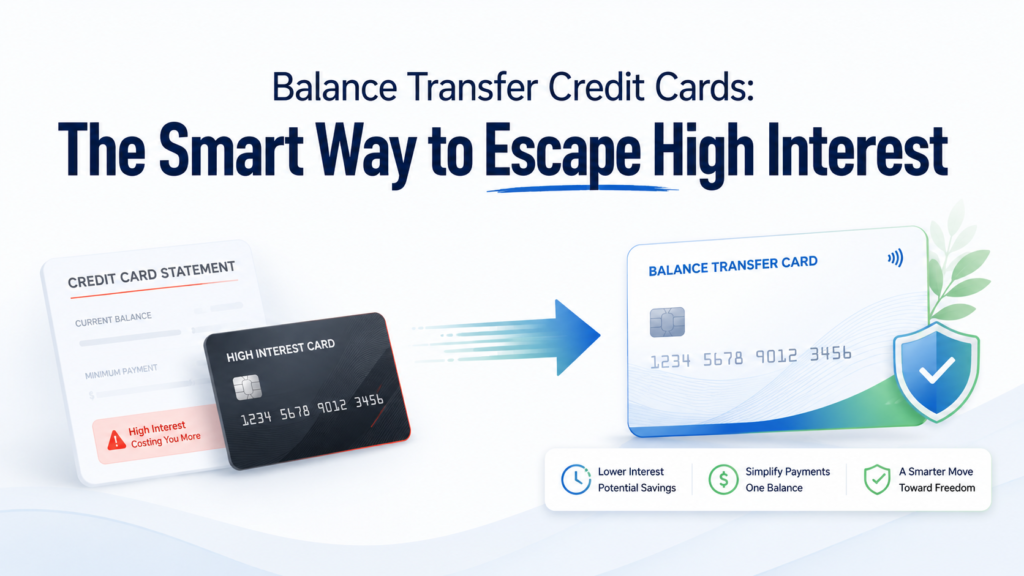
A balance transfer credit card lets you move debt from one credit card to another. People usually do this to get a lower interest rate, often through a promotional offer like 0% intro APR.
Here is the simple version: instead of paying high interest on an old card, you transfer that balance to a new card with better temporary terms. Then you use the promotional period to pay down the debt faster.
The card does not erase your debt. It just moves it to a new place where it may cost less for a while. Think of it like moving a leaky bucket under a roof. You still have the bucket, but at least it is not getting rained on every minute.
A balance transfer usually includes three important parts:
- The transferred balance: The amount of debt you move from the old card.
- The promotional APR: The temporary interest rate that applies for a set period.
- The balance transfer fee: The cost of moving the debt, usually added to the new card balance.
Consumer finance guidance defines a balance transfer as moving an outstanding balance from one credit card to another, sometimes for a fee. It also notes that many credit card companies use low-interest or zero-percent balance transfer offers to encourage debt consolidation.
For example, say you have a $5,000 balance on a credit card with a high APR. You open a balance transfer card with 0% intro APR for a limited time. If the transfer gets approved, the new card pays off the old card balance, and you now owe that $5,000, plus any transfer fee, on the new card.
The real benefit comes from what happens next. During the intro APR period, more of your payment can go toward the balance instead of interest. That can help you pay down debt faster, as long as you avoid new charges and stick to the plan.

Why People Use Balance Transfer Credit Cards to Pay Down Debt Faster
People use balance transfer credit cards because credit card interest can make debt feel like a treadmill. You keep making payments, but the balance barely moves. Not exactly the kind of cardio anyone asked for.
A balance transfer can help by giving you a temporary break from interest. During a 0% intro APR period, more of each payment can attack the actual balance instead of getting nibbled away by interest.
This matters because credit card rates are often high. Federal Reserve data showed the average interest rate on commercial bank credit card plans was 21.00% in February 2026, based on the latest available FRED observation at the time of writing.
Here is a simple example.
Say you owe $5,000 on a high-interest credit card. If you transfer that balance to a card with a 0% intro APR offer, you may get several months to pay down the balance without new interest building up. You may still pay a transfer fee, but the interest savings can outweigh the fee if you pay aggressively.
The main benefit is control. A balance transfer gives you a clearer payoff window. Instead of watching interest pile up month after month, you can divide the balance by the number of promotional months and set a monthly payment goal.
| Example Balance | Promo Period | Rough Monthly Target |
|---|---|---|
| $5,000 | 12 months | $417 |
| $5,000 | 15 months | $334 |
| $5,000 | 18 months | $278 |
These numbers do not include transfer fees, but they show the basic idea. A balance transfer turns a vague debt problem into a specific payment target.
That structure can be helpful. It also puts pressure on you to follow through. The card gives you the window. Your payment plan does the heavy lifting.

How Balance Transfer Credit Cards Work From Application to Payoff
A balance transfer credit card works in a simple sequence. You apply for a new card, request the transfer, pay any required fee, and then use the promotional period to pay down the debt.
The process is not complicated, but the details matter. One missed deadline or misunderstood fee can turn a helpful offer into a very expensive “oops.”
1. You apply for a balance transfer card
First, you apply for a credit card that offers a balance transfer promotion. Many cards advertise a low or 0% introductory APR for balance transfers, but the offer usually depends on your credit profile, income, and approval terms.
Before you apply, look at the full offer details. Pay attention to:
- The intro APR
- How long the intro period lasts
- The balance transfer fee
- The regular APR after the promotion ends
- Any annual fee
- The deadline for requesting a transfer
A low intro rate is helpful, but it is only one piece of the decision.
2. You request the balance transfer
After approval, you request the transfer through the new card issuer. You usually provide the old card account details and the amount you want to transfer.
The new card issuer then sends payment to the old card issuer. Once the transfer goes through, your old card balance drops or gets paid off, and the transferred amount appears on your new card.
3. You pay the balance transfer fee
Most balance transfers are not free. The card issuer may charge a fee for moving the debt, even if the promotional APR is 0%.
That fee usually gets added to your new card balance. So, if you transfer $5,000 and pay a 3% fee, you would add $150 to the balance.
Now your payoff target is not $5,000. It is $5,150.
Tiny detail. Big difference.
4. You pay down the balance during the intro period
Once the transfer is complete, the real work begins. The intro APR period gives you a window to make progress without interest eating into every payment.
A smart move is to divide your total balance after fees by the number of promotional months. That gives you a monthly payoff target.
| Transferred Balance | Transfer Fee | Total to Pay | Promo Period | Monthly Target |
|---|---|---|---|---|
| $5,000 | 3% or $150 | $5,150 | 15 months | About $344 |
| $5,000 | 5% or $250 | $5,250 | 15 months | $350 |
| $7,500 | 3% or $225 | $7,725 | 18 months | About $430 |
This simple math helps you avoid the “I’ll deal with it later” trap. Future you will appreciate the help.
5. You avoid new debt while paying it off
A balance transfer can lose its value if you keep adding new purchases. Some cards treat purchases and balance transfers differently, and new purchases may not receive the same promotional rate.
You should read the terms before using the card for anything else. Better yet, use the card only for the transferred balance until you pay it off.
The goal is to lower the cost of old debt, not build a shiny new pile beside it.
6. You finish before the regular APR begins
The intro APR does not last forever. Federal consumer rules require an introductory balance transfer rate to stay in effect for at least six months, unless the cardholder becomes more than 60 days late on a payment.
After the promotion ends, the regular APR may apply to any remaining balance. That is why your payoff plan matters from the start.
A balance transfer credit card works best when you treat the promotional period like a deadline, not a vacation.

The Real Cost of a Balance Transfer Fee
A balance transfer credit card may offer 0% intro APR, but that does not always mean the transfer costs $0.
Most of the time, the cost comes from the balance transfer fee. This is the fee the card issuer charges to move your debt from one card to another. Credit card companies can charge a balance transfer fee even when the promotional interest rate is 0%.
That fee usually gets added to your new card balance. So, the more you transfer, the more the fee can matter.
Here is the basic formula:
Transferred balance × balance transfer fee = transfer cost
| Balance Transferred | Balance Transfer Fee | Cost of Transfer | New Balance |
|---|---|---|---|
| $3,000 | 3% | $90 | $3,090 |
| $5,000 | 3% | $150 | $5,150 |
| $10,000 | 3% | $300 | $10,300 |
| $5,000 | 5% | $250 | $5,250 |
| $10,000 | 5% | $500 | $10,500 |
This is why you should never judge a balance transfer card by the intro APR alone. A 0% offer can still save you money, but the fee changes the math.
The key question is simple:
Will the interest savings be higher than the transfer fee?
If yes, the card may help. If no, the transfer may only move your debt around and add another charge to the pile. That is not debt strategy. That is debt musical chairs.
A balance transfer fee is not always a dealbreaker. It is just the price of admission. The smart move is making sure the show is worth the ticket.
When a 0% Intro APR Offer Can Save You Money
A 0% intro APR balance transfer can save you money when it lowers your total interest cost by more than the fee you pay to transfer the balance.
That is the whole test.
The 0% rate looks exciting, and for good reason. When your current card has a high APR, moving the balance to a 0% intro APR card can give you breathing room. During the promotional period, your payments can reduce the balance instead of fighting interest every month.
Here is a simple comparison.
| Scenario | Current Card | Balance Transfer Card |
|---|---|---|
| Balance | $5,000 | $5,000 |
| APR | 21% | 0% intro APR |
| Transfer fee | None | 3% or $150 |
| Total starting balance | $5,000 plus interest | $5,150 |
| Main benefit | No transfer fee | No interest during promo period |
In this example, the balance transfer starts to make sense if the 0% intro APR helps you avoid more than $150 in interest. If the savings beat the fee, the card can help. If the fee is higher than the interest you would avoid, the offer may not be worth it.
A 0% intro APR offer can make sense when:
- You can pay off most or all of the balance before the promo period ends
- Your current card has a high APR
- The transfer fee is lower than your expected interest savings
- You will stop using the old card for new debt
- You can make every payment on time
It may not save you money when:
- The balance transfer fee is too high
- You only make minimum payments
- You keep adding new purchases
- You cannot pay much down before the regular APR begins
- You miss payments and risk losing the promotional benefit
The easiest way to judge the offer is to do one quick calculation:
Total balance after transfer ÷ number of promo months = monthly payoff target
For example, if you transfer $5,000 with a 3% fee, your new balance becomes $5,150. If the intro period lasts 15 months, your monthly target is about $344.
That number tells you whether the offer is realistic. If $344 per month fits your budget, the card may help you make real progress. If it does not, the offer may still reduce interest for a while, but it may not solve the bigger problem.
When a Balance Transfer Credit Card Is a Bad Idea
A balance transfer credit card can help you save money, but it can also backfire if the offer does not fit your budget or habits.
The card gives you a lower-interest window. It does not fix the spending pattern, income gap, or payment problem that created the debt in the first place. That part still needs a plan. Annoying? Yes. Important? Very.
A balance transfer may be a bad idea when you cannot afford the monthly payment needed to pay off the balance before the promotional period ends. Once the intro period expires, the regular APR can apply to any balance you still owe.
It may also be risky if you tend to keep using cards while paying down old debt. Moving a balance to a new card can make the old card look “free” again, but the old card is not free money. It is just a trap wearing a fresh coat of paint.
A balance transfer may not make sense when:
- The transfer fee is higher than the interest savings. If the fee costs more than the interest you would avoid, the transfer does not help much.
- You only plan to make minimum payments. Minimum payments may not be enough to clear the balance before the promotional period ends.
- You expect to keep adding new purchases. New spending can make the debt harder to manage and may not receive the same promotional APR.
- You may miss payments. Late payments can lead to fees, credit damage, and possible loss of promotional terms, depending on the card agreement.
- You do not know the regular APR. The promotional rate gets attention, but the regular APR matters if you carry a balance after the intro period.
- Your credit limit is too low. If the new card only lets you transfer a small part of your debt, the savings may be limited.
- You need deeper debt help. If you cannot make steady payments at all, a balance transfer may delay the problem instead of solving it.
The biggest warning sign is simple: the numbers do not work.
Before applying, divide the full transferred balance, including the fee, by the number of promotional months. That number is your rough monthly payoff target.
| New Balance After Fees | Promo Period | Monthly Payoff Target |
|---|---|---|
| $6,180 | 12 months | $515 |
| $6,180 | 15 months | $412 |
| $6,180 | 18 months | $343 |
If that payment fits your budget, the card may help. If it does not, the balance transfer may only buy time. Sometimes time is useful. Sometimes it is just a very polite way for debt to wait in the hallway.

How to Compare Balance Transfer Credit Card Offers
A balance transfer credit card should look good on paper and make sense in your actual budget. Both matter.
The best offer is not always the one with the longest 0% intro APR. It is the one that helps you pay less overall and gives you enough time to clear the balance without creating new problems.
| Feature | What to Look For | Why It Matters |
|---|---|---|
| Intro APR | A low or 0% promotional rate | This lowers interest while you pay down the balance |
| Promo period length | Enough months to realistically repay the debt | More time can make monthly payments easier |
| Balance transfer fee | A percentage or flat fee | This affects your true cost |
| Regular APR | The rate after the promo period ends | This matters if you still carry a balance later |
| Transfer deadline | How soon you must transfer after opening the card | Some offers require quick action |
| Credit limit | Enough room to transfer the amount you need | A low limit may reduce the benefit |
| Annual fee | Ideally $0, unless the savings justify it | Extra fees can shrink your savings |
| Same-bank rules | Whether your current issuer allows the transfer | Many issuers restrict transfers between their own cards |
Start with the intro APR and promo length. These two numbers tell you how much time you have to pay down the balance at the promotional rate.
Then look at the balance transfer fee. A 0% intro APR offer can still include a fee, so you need to include that cost in your payoff math.
Next, check the regular APR. This is the rate that may apply after the intro period ends. If you still owe money at that point, the remaining balance can become expensive again.
Here is how different offers might compare on the same $6,000 balance.
| Offer | Intro Period | Transfer Fee | Total to Repay | Monthly Target |
|---|---|---|---|---|
| Card A | 15 months | 3% or $180 | $6,180 | $412 |
| Card B | 18 months | 5% or $300 | $6,300 | $350 |
| Card C | 12 months | 3% or $180 | $6,180 | $515 |
Card B has the higher fee, but the longer promo period makes the monthly target lower. Card A costs less overall, but it requires a higher monthly payment. Card C may work only if you can afford a more aggressive payoff plan.
This is why “best” depends on your budget. A card that looks perfect for one person may be a poor fit for someone else.
Before you choose, ask three simple questions:
- Can I afford the monthly payment needed to finish before the promo ends?
- Will the interest savings be higher than the transfer fee?
- Can I avoid new purchases while paying this down?
A balance transfer offer should make your debt easier to manage, not harder to understand. If the terms feel confusing, slow down and read the pricing details before applying. Fine print is not fun reading, but neither is surprise interest.
Balance Transfer Credit Card vs Personal Loan vs Debt Consolidation
A balance transfer credit card is one way to manage credit card debt, but it is not the only option. A personal loan or debt consolidation loan may work better depending on your balance, credit profile, payment habits, and timeline.
The main difference comes down to structure.
A balance transfer card gives you a temporary promotional rate, often 0% APR, for a set period. A personal loan gives you a fixed repayment schedule with regular monthly payments. Debt consolidation is the broader strategy of combining multiple debts into one payment, often through a loan or balance transfer. Consumer finance guidance describes debt consolidation as using a loan to combine separate debts into one payment, sometimes at a lower interest rate than the debts you already have.
| Option | Best For | Main Benefit | Main Risk |
|---|---|---|---|
| Balance transfer credit card | Credit card debt you can pay off during the promo period | Low or 0% intro APR | Regular APR may apply after the promo ends |
| Personal loan | Larger balances that need steady repayment | Fixed payments and clear payoff date | Interest starts right away |
| Debt consolidation loan | Multiple debts across cards or accounts | One payment instead of several | Fees or longer repayment may increase total cost |
A balance transfer credit card may work best when you have good enough credit to qualify for a strong offer and can pay off the balance before the intro APR ends. It can be a smart short-term tool if the transfer fee is lower than the interest you avoid.
A personal loan may work better when you need more time or prefer a fixed monthly payment. Instead of racing against a promotional deadline, you repay the loan over a set term. That structure can help if you want predictability. It also prevents the “I’ll just make the minimum payment forever” problem, which is where debt goes to build a small vacation home.
A debt consolidation loan is usually a personal loan used to combine several debts. This can simplify your payments and may lower your interest rate, but you still need to watch the total cost.
Be careful with any option that lowers your payment but stretches the debt for too long. A smaller monthly payment can feel good, but it may cost more over time if the repayment period grows.
The goal is not just one cleaner bill. The goal is less debt, less interest, and fewer financial headaches.

Who Should Consider a Balance Transfer Credit Card
A balance transfer credit card may make sense if you have credit card debt, qualify for a strong promotional offer, and can follow a clear payoff plan.
This strategy works best for people who want to reduce interest, not delay the problem. A balance transfer can lower the cost of debt for a limited time, but it still requires steady payments and a little financial self-control. Not glamorous, but very useful.
You may be a good fit if:
- You have high-interest credit card debt. A lower promotional APR can help more of your payment go toward the balance.
- You can qualify for a good offer. The strongest balance transfer offers usually go to borrowers with stronger credit profiles.
- You can afford a realistic monthly payment. Divide the transferred balance, including the fee, by the number of promotional months. That number should fit your budget.
- You have a clear payoff deadline. The intro rate is temporary, so you need a plan before the regular APR begins.
- You can avoid new purchases. A balance transfer should help you pay down old debt, not create fresh debt with nicer packaging.
- The fee still makes sense. The transfer fee should cost less than the interest you expect to avoid.
Here is a quick fit check.
| Question | Good Sign | Warning Sign |
|---|---|---|
| Can you pay off the balance during the promo period? | Yes, or close to it | No clear payoff plan |
| Will the fee be lower than the interest saved? | Yes | No, or you are unsure |
| Can you stop using the card for new purchases? | Yes | You may keep spending |
| Can you make every payment on time? | Yes | Payments already feel unstable |
| Do you understand the regular APR? | Yes | You only looked at the 0% offer |
A balance transfer credit card can work well for someone who has a temporary interest problem and a realistic repayment plan. It may not work well for someone who needs deeper debt help, cannot make consistent payments, or keeps relying on credit cards for everyday expenses.
The best candidate for a balance transfer card is not someone looking for a quick escape. It is someone ready to use a lower-interest window to make real progress.

Common Balance Transfer Mistakes That Can Cost You Money
A balance transfer credit card can save money, but small mistakes can shrink the benefit fast. The offer may look simple from the outside, but the details decide whether it helps or hurts.
The good news is that most balance transfer mistakes are avoidable. You just need to know where the little traps like to hide. They are not exactly wearing name tags.
Mistake 1. Ignoring the balance transfer fee
A 0% intro APR offer can still come with a balance transfer fee.
That fee can change the value of the offer. If you transfer $8,000 with a 3% fee, the fee adds $240. Your new balance becomes $8,240.
Before you transfer, compare the fee with the interest you expect to save.
Mistake 2. Missing the transfer deadline
Some cards require you to complete the balance transfer within a specific window after opening the account. If you miss that deadline, you may lose the promotional terms.
This is one of those details that hides in the card agreement. Not thrilling reading, but very useful reading.
Mistake 3. Paying only the minimum
Minimum payments may keep your account current, but they may not pay off the balance before the promotional period ends.
A better move is to calculate your monthly payoff target.
Balance after fees ÷ promo months = monthly payment target
If that number does not fit your budget, the card may not solve the full problem.
Mistake 4. Using the new card for purchases
A balance transfer card should help you pay down old debt. It should not become a new spending card.
New purchases may have different APR terms than the transferred balance. They can also make your payoff plan harder to track. You wanted one fire to put out, not a little campfire next to it.
Mistake 5. Forgetting the regular APR
The promotional APR gets the attention, but the regular APR matters if you still owe money after the intro period ends.
Before you apply, check what rate may apply once the promotion expires. If the regular APR is high and your payoff plan is weak, the card may only delay the interest problem.
Mistake 6. Making a late payment
Late payments can damage the value of the offer. They can trigger late fees, hurt your credit, and may put promotional terms at risk, depending on the card agreement.
If you become more than 60 days late, the issuer may increase the rate on all balances, including a transferred balance.
Payment reminders matter. Autopay can help, even if you only use it for the minimum payment as a safety net.
Mistake 7. Treating the old card like free money
After a transfer, your old card may show a lower balance or even a zero balance. That can feel like progress, and it is progress.
But if you start using the old card again, you may end up with debt on both cards. That is the financial version of cleaning one room by throwing everything into another room. Technically different. Not better.
A balance transfer works best when you pair it with a simple rule: no new credit card debt while you pay off the transferred balance.
Final Verdict: Is a Balance Transfer Credit Card Worth It?
A balance transfer credit card can be worth it when it helps you pay less interest and get out of debt faster.
The best-case scenario is simple. You transfer high-interest credit card debt to a card with a low or 0% intro APR, pay the transfer fee, and use the promotional period to reduce the balance aggressively. If the interest savings are higher than the fee, the move can make sense.
But a balance transfer is not a shortcut around repayment. It is a tool that gives you a temporary window.
A balance transfer credit card may be worth it if you can answer “yes” to three questions:
- Can I afford the monthly payment needed to pay down the balance before the promo ends?
- Will I save more in interest than I pay in transfer fees?
- Can I avoid new credit card debt while I pay this off?
If the answer is yes, a balance transfer can help you turn a messy debt situation into a cleaner payoff plan.
If the answer is no, the card may only move the problem from one account to another. Same debt, different outfit.

Frequently Asked Questions
Does a balance transfer credit card hurt your credit?
A balance transfer credit card can affect your credit in a few ways. Applying for a new card may create a hard inquiry. Opening a new account can also change your average account age.
However, the transfer may help your credit utilization if it gives you more available credit and you avoid adding new debt. The key is to keep payments on time and avoid maxing out the new card.
Can I transfer a balance from one card to another from the same bank?
Many card issuers do not allow you to transfer a balance between two cards from the same bank. Rules vary by issuer, so you should check the card terms before applying.
This detail matters because you do not want to apply for a card and then discover your current balance does not qualify for the promotion. That is a paperwork-flavored disappointment.
What credit score do I need for a balance transfer card?
The strongest balance transfer offers usually go to borrowers with stronger credit profiles. Card issuers look at more than your score, though. They may also review your income, existing debt, payment history, and overall credit profile.
A higher score can improve your approval odds, but it does not guarantee approval or a high enough credit limit to transfer the full balance.
Is a 0% balance transfer really free?
Not always. A 0% intro APR offer may still include a balance transfer fee.
That means you should compare the fee with the interest you expect to save. If the savings beat the fee, the offer may help. If not, the transfer may not be worth it.
What happens when the intro APR ends?
When the intro APR ends, the regular APR may apply to any remaining balance. That can make the debt more expensive if you still owe a lot.
This is why your payoff plan matters before you transfer. Divide the full balance, including the fee, by the number of promotional months. That gives you a realistic monthly payment target.
Can I keep using my old credit card after a balance transfer?
Yes, the old card may stay open after the transfer unless you close it or the issuer takes another action. But using it again can create a bigger problem.
If you transfer the balance and then start spending on the old card, you may end up with debt on both cards. A balance transfer works best when you stop adding new credit card debt and focus on paying down the transferred balance.
What happens if I miss a payment?
A missed payment can trigger late fees, hurt your credit, and put your promotional APR at risk.
Some card issuers may end a 0% promotional APR early after a late or missed payment, depending on the card terms. If you become more than 60 days late, the issuer may also raise the rate on all balances, including the transferred balance.
The safest move is to set up autopay for at least the minimum payment. That gives you a backup if life gets busy, messy, or aggressively Monday.

0 Comments